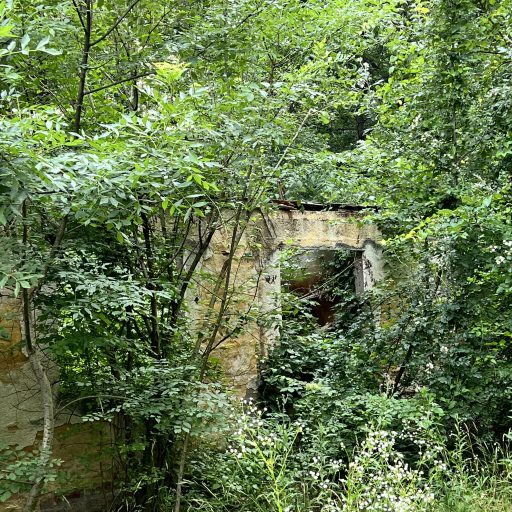
It was late September, 1993, in Smederevska Palanka, Serbia. A warm breeze carried the sweet smell of roasted peppers and chestnuts through the air. We turned off the main road onto a narrow path through a forest of naked trees, tangled bushes, and mud-soaked leaves. My dad’s borrowed blue car creaked along the uneven road, the damp gray forest swallowing us in silence. This was my first visit to a refugee camp as a volunteer psychologist. Families had recently settled here, in an improvised camp repurposed from an old school ground. I didn’t know what to expect. The quiet tension inside me mirrored the landscape—familiar yet unsettled, like the ground beneath us, fragile and shifting. What I saw and heard that day stayed with me. Stories of loss woven into everyday moments. The weight of absence felt in the smallest gestures. It was there, listening to those stories, that I began to understand trauma not as an isolated event, but as something living in the spaces between people—in their relationships, their memories, their hopes. This book builds on that understanding.
After five slow, bumpy minutes, we crossed a small bridge into a clearing, where two yellow buildings faced a cement-covered yard. Nearby, outdoor water faucets trickled, and narrow paths led toward the buildings. One building, a former dormitory, still held rows of bunk beds. The other—once a kitchen and classrooms—now served as a communal dining hall and sleeping space, crowded with portable beds and sleeping bags.
Amid the bleak surroundings, hesitant children approached. A boy in an oversized jacket and summer slippers. A young girl with tangled brown hair. A toddler no older than two. Behind them, cautious teenagers hung back, their laughter edged with unease. From the corner of my eye, I saw mothers peering through dusty windows, their worry palpable. The children, curious now, began asking questions: Who are you? What did you bring? Why are you here? We handed out the small treats we had brought, knowing how little they were against the vastness of these children’s needs. Smiles flickered for a moment, then faded. As our team introduced ourselves and explained our purpose, the air softened, but the weight of emotion still lingered.
I stood there, eager to do something and overwhelmed by powerlessness, at the same time. Fresh out of school and empowered by a young person’s naiveté, I thought I was ready to resist the political violence and engage with humans who were suffering. My training had given me knowledge, but I was definitely not prepared for this—trauma, loss, and displacement. How do you help families with children who have lost everything? A warm bed. A home. A sense of safety. I had learned a lot in my psychology training, but not how to respond to this reality. Yet, there was no turning back.
This challenging and, at the same time, meaningful moment marked the first step in my long journey to understanding refugee trauma. I was confronted with the limitations of our training and, almost instantly, became aware of how interconnected everything is – the space, the community, the policy, the relationships, citizenship status, and mental health. Addressing the impact of political violence and forced migration required far more than clinical training, and yet, even small acts such as bringing the candy, can potentially have an impact. Human connection, humility, and a recognition of the larger environmental and existential dimensions of the refugee experience can be powerful tools for creating a change.
 Beyond Refugee Trauma
Leave a comment